SWS – Safe Watch Systems
Your Trusted Source for Smart Surveillance

SWS – Safe Watch Systems
Your Trusted Source for Smart Surveillance
Your Trusted Source for Smart Surveillance
Your Trusted Source for Smart Surveillance
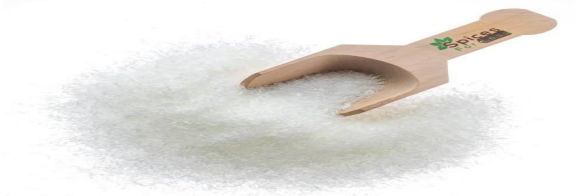
Having BSTI Certification which controls our top-quality food & food ingredients and assortments of toppings will give our customers an authentic and mouth-watering Japanese dining experience following food safety and security obtained from BCSIR. This article examines MSG and its health effects, exploring both sides of the argument. MSG is short for monosodium glutamate. It is a common food additive that is used to enhance flavor. MSG is derived from the amino acid glutamate, or glutamic acid, which is one of the most abundant amino acids in nature. Glutamic acid is a non-essential amino acid, meaning that your body can produce it. It serves various functions in your body and is found in nearly all foods. Chemically, MSG is a white crystalline powder that resembles table salt or sugar. It combines sodium and glutamic acid, known as a sodium salt. The glutamic acid in MSG is made by fermenting starches, but there is no chemical difference between the glutamic acid in MSG and that in natural foods. However, the glutamic acid in MSG may be easier to absorb because it isn’t bound inside big protein molecules that your body needs to break down. MSG enhances the savory, meaty umami flavor of foods. Umami is the fifth basic taste, along with salty, sour, bitter and sweet. This additive is popular in Asian cooking and used in various processed foods in the West. The average daily intake of MSG is 0.55–0.58 grams in the US and UK and 1.2–1.7 grams in Japan and Korea.
Why do people think it’s harmful?
Glutamic acid functions as a neurotransmitter in your brain. It is an excitatory neurotransmitter, meaning that it stimulates nerve cells in order to relay its signal. Some people claim that MSG leads to excessive glutamate in the brain and excessive stimulation of nerve cells. For this reason, MSG has been labeled an excite toxin. Fear of MSG dates as far back as 1969, when a study found that injecting large doses of MSG into newborn mice caused harmful neurological effects. Since then, books like Russell Blaylock’s “excite toxins: The Taste That Kills” have kept this fear of MSG alive. It’s true that increased glutamate activity in your brain can cause harm and that large doses of MSG can raise blood levels of glutamate. However, dietary glutamate should have little to no effect on your brain, as it cannot cross the Blood-Brain Barrier in large amounts. Overall, there is no compelling evidence that MSG acts as an excite toxin when consumed in normal amounts.
Some people may be sensitive:
Some people may experience adverse effects from consuming MSG. This condition is called Chinese restaurant syndrome or MSG symptom complex. In one study, people with self-reported MSG sensitivity consumed either 5 grams of MSG or a placebo 36.1% reported reactions with MSG compared to 24.6% with a placebo. Symptoms included headache, muscle tightness, numbness, tingling, weakness and flushing. The threshold dose that causes symptoms seems to be around 3 grams per meal. However, keep in mind that 3 grams is a very high dose about six times the average daily intake in the US. It is unclear why this happens, but some researchers speculate that such large doses of MSG enable trace amounts of glutamic acid to cross the blood-brain barrier and interact with neurons, leading to brain swelling and injury. Some claim that MSG also causes asthma attacks in susceptible individuals. In one 32-person study, 40% of participants experienced an asthma attack with large doses of MSG. However, other similar studies did not find any relationship between MSG intake and asthma.
Impact on flavor and calorie intake:
Certain foods are more filling than others. Eating filling foods should reduce your calorie intake, which may aid weight loss. Some evidence suggests that MSG may help you feel full. Studies note that people who consume soups flavored with MSG eat fewer calories at subsequent meals. MSG’s umami flavor may stimulate receptors found on your tongue and in your digestive tract, triggering the release of appetite-regulating hormones. That said, other studies indicate that MSG increases — rather than decreases — calorie intake. Therefore, it’s best not to rely on MSG to help you feel full.
Impact on obesity and metabolic disorders:
Some people associate MSG with weight gain. In animal studies, injecting high doses of MSG into the brains of rats and mice caused them to become obese. However, this has little — if any — relevance to dietary intake of MSG in humans. That said, several human studies link MSG consumptions to weight gain and obesity. In China, increased MSG intake has been linked to weight gain — with average intake ranging from 0.33–2.2 grams per day. However, in Vietnamese adults, an average intake of 2.2 grams per day was not associated with being overweight. Another study tied increased MSG intake to weight gain and metabolic syndrome in Thailand — but it has been criticized for methodological flaws. In a controlled trial in humans, MSG raised blood pressure and increased the frequency of headaches and nausea. However, this study used unrealistically high doses. More human studies are needed before full claims can be made about MSG’s link to obesity or metabolic disorders. Monosodium glutamate, also known as sodium glutamate and MSG, is a sodium salt of the non-essential amino acid glutamic acid. It is used as a food additive and is commonly marketed as a flavor enhancer.
Pure MSG is not reported to have a highly pleasant taste until it is combined with a savory odor. The basic sensory function of MSG is attributed to its ability to enhance the presence of savory taste-active compounds when included at the right concentration. The optimum concentration varies with the type of food; in clear soup, the pleasantness score rapidly falls with more than 1 g of MSG per 100 ml. There is also an interaction between MSG and salt (sodium chloride), and other umami substances such as nucleotides, with these properties, MSG can be used to reduce salt intake (sodium), which predisposes to hypertension, heart diseases and stroke. By adding MSG appropriately, salt can be reduced by 30 to 40 percent without a perceived reduction in saltiness. The sodium content (in mass percent) of MSG is roughly a third of the amount (12%) than in sodium chloride (39%). Other salts of glutamate have been used in low-salt soups, but with a lower palatability than MSG. 17.4
AT A GLANCE ON MSG:
MSG was classified by the U.S. Food and Drug Administration as generally recognized as safe (GRAS) and by the European Union as a food additive. MSG has the HS code 29224220 and the E number E621. The L-glutamate form of MSG confers the same umami taste of free L-glutamate naturally found in foods. Industrial food manufacturers market and use MSG as a flavor enhancer because it balances, blends and rounds the total perception of other tastes. MSG has been used for more than 100 years to season food. During this period, many studies have been conducted on the safety of MSG. At this point, international and national bodies for the safety of food additives consider MSG safe for human consumption as a flavor enhancer. The “MSG symptom complex” was originally termed the “Chinese Restaurant Syndrome” when Robert Ho Man Kwok anecdotally reported the symptoms he felt after an American-Chinese meal. Kwok suggested multiple reasons behind the symptoms, including alcohol from cooking with wine, the sodium content, or the MSG seasoning. But MSG became the focus and the symptoms have been associated with MSG ever since. The effect of wine or salt content was not studied. With the years, the list of non-specific symptoms has grown on anecdotal grounds. In normal conditions, humans have the ability to metabolize glutamate that has a very low acute toxicity. The oral lethal dose to 50% of subjects (LD50) is between 15 to 18 g/kg body weight in rats and mice respectively, five times greater than the LD50 of salt (3 g/kg in rats). Therefore, the intake of MSG as a food additive and the natural level of glutamic acid in foods do not represent a toxicological concern in humans.